Is your small business situated in England and you’re aiming for a significant digital impact? A polished and well-constructed website is no longer optional in today’s internet age; it’s an essential component of business. It represents your online presence, is a non-stop sales assistant and usually constitutes the primary contact that new clients have with your business brand. With so many talented persons and enterprises, how will you select a web designer in England that’s a perfect fit for the tasks required? This informative article is put together to simplify that quest to find someone who can positively enhance your small business and Web Designer England.
Finding Your Best Web Designer
What is a Web Designer?
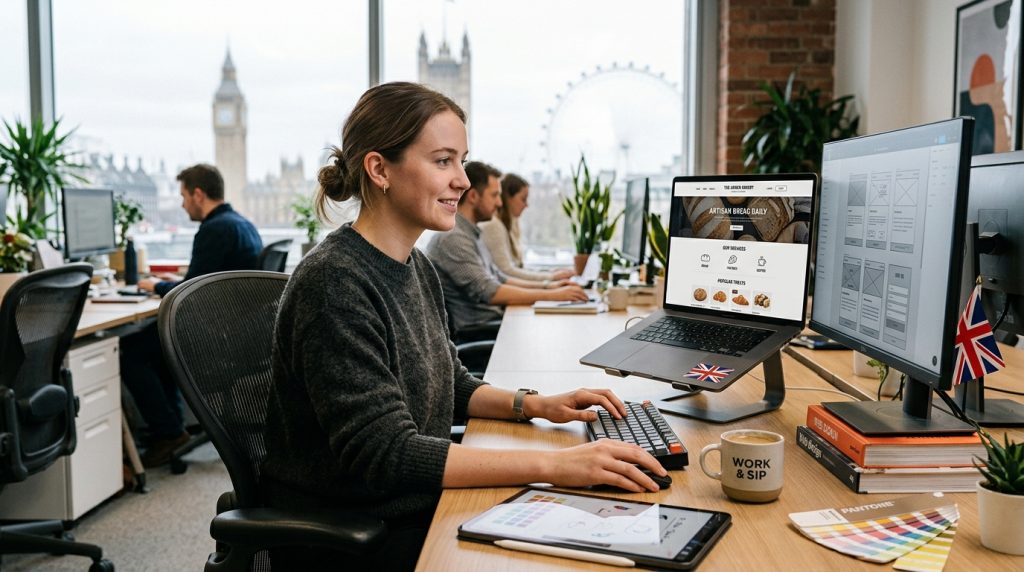
Ultimately, a web designer is an artist who uses design principles to determine the way your website looks and feels and how a user interacts with your site. They are the artists of the internet world, taking your business needs and identity and building a great looking, well working website. Web designers can have both artistic and technical skills, deciding the colour schemes, the type of text to use, the position of elements on a page and navigation pathways.
If you owned a bricks and mortar shop, the web designer is the equivalent of your interior decorator-just much, much larger scale. Instead of furniture alone, the web designer will also consider the customer journey. They’ll consider how a user will navigate your site, whether it looks good on every device (desktops through to smartphones), and ensure it’s speedy. They will often have some basic knowledge of SEO and, crucially, they’ll be aiming to transform visitor into paying customer.
Besides the look of your site, web designers can greatly contribute to UX and UI design. UX focuses on what a visitor feels when interacting with your site. Is your site user-friendly, enjoyable and easy to use? UI deals with the interactive elements and visuals a visitor interacts with on your site (forms, buttons, menu, etc.) A good web designer can integrate these elements seamlessly so as to offer the most pleasant user experience to the visitors.
Why is a Great Web Designer Important for Your Small Business?
In today’s competitive market, your website is arguably your customer’s first point of contact with your company. If your website is not professionally designed, looks outdated or has an unappealing design, it will undoubtedly send your customer elsewhere. This will lose your business an opportunity, and impact your business’ credibility. Conversely, a professional website provides a strong marketing tool that portrays your brand as reliable, professional and detail conscious. Your website is your company’s handshake, and it must be strong.
A well-designed website built by the best web designer England can offer doesn’t just look good; it performs well. This means it’s optimized for search engines like Google, making it easier for potential customers to find you when they search for your products or services. It’s also mobile-friendly, ensuring a seamless experience for the vast majority of internet users who browse on their phones. Furthermore, a good designer will create a site that clearly communicates your unique selling propositions and guides visitors towards making a purchase or inquiry, directly impacting your bottom line.
As the final sum up, hiring professional web designer is actually investing to your business growth. They could help you distinguish from the competition, establishing close relationship with the customers and reach your business goals. You may think it as building a strong base for your online appearance that could support your entire online marketing plan in future. They build up a website asset that can serve you every minute in everyday.
England’s Top Digital Talent
How to Find the Best Web Designer England Has to Offer
Now, in finding the right web designer. Luckily for us the English are incredibly skilled. Your first consideration should be the boundaries and cost of the design that you require. What should your website deliver? Do you need e-commerce on there, a blog, portfolio, or some other function? If you have an idea of this then you can effectively eliminate some choices from your search, and give them what information that they need to quote effectively. Note down anything that you “must have” and anything that would be a “nice to have”.
When you know what you’re after, get searching. Online portfolios on websites such as Behance, Dribbble and even LinkedIn are brilliant for identifying potential designers or agencies, looking for individuals and companies who have previously completed work in the style you’re looking for. Check their portfolios for style, usefulness, and even what types of clients they’ve been commissioned to work with before. Don’t rule out individuals and small design companies, as often you’ll get a much more personal service, and their prices may be lower too; try searching “small business web design London” or “freelance web designer Manchester”.
When you’ve identified a few potential candidates, it’s time to reach out. Request proposals that detail their understanding of your project, their proposed approach, timelines, and costs. Don’t hesitate to ask for references from past clients. A truly professional designer will be transparent about their process and happy to answer all your questions. Remember, this is a partnership, so ensure you feel a good rapport and that they understand your business goals. The best web designer England has will be a good communicator and a strategic thinker, not just a coder.
It has now become essential to have a strong presence on the internet for small businesses. A well designed website builds trust, customers and increases sales. That is why selecting a Web Designer England can really improve how business can be conducted over the internet in 2026.
- Small Businesses Needs a Professional Website
Though businesses rely on local customers in 2026 online presence plays an equally important part in gaining customer interaction. A good website is essentially your online shop that can be accessed 24/7. This allows a customer to visit your store whenever they wish. With the help of a skilled Web Designer England it is easy to have a website that is not only mobile friendly and accessible on all browsers but also loads quick and fast. - Qualities of a Good Web Designer
A top rated web designer must have the capability of using design to create appealing layouts, user friendly interfaces and SEO friendly structure. This will enable a professional Web Designer England to build your website in a way that it loads instantly, is available on all devices, search engine friendly etc. - Advantages of hiring a Web Designer England
There are several benefits that small businesses receive from hiring a local professional. A Web Designer England can help a small business gain information on customers and what they may want to buy. They can also customize it for you so it works for your specific business. Communication and continued support are easier to access when it is from someone in your locality. - Web design trends for 2026
Trends in the web design sector appear to be moving at a rapid pace with the most prevalent trends being that of AI chat bots, minimalist design, rapid page loads, mobile design and etc. A professional Web Designer England can ensure that you remain in sync with these modern trends to better serve you. - Conclusion
Selecting the correct web designer will surely benefit your small business. The help of a skilled Web Designer England can greatly contribute to increasing your customer base and revenue and thus would be one of the best decisions you can make for your small business in 2026.
What to Look for in a Web Designer
When considering designers, portfolio strength is very important. Do the designs in their portfolio match the style of your brand and the type of functionality your site needs to provide? It is more than just how well a website looks visually, you need to see how easy it is to use. Are there clear menus? Does it load quickly?A designer who shows work for a range of clients will be able to demonstrate an ability to adapt to a new client and business. What kind of businesses have they helped to achieve their goals? Have they had previous small businesses clients who have seen great success?
Beyond their creative output, consider their communication skills and understanding of your business needs. The best web designer England has will actively listen to your ideas, ask insightful questions, and offer solutions that align with your goals. They should be able to explain technical aspects in a way that’s easy for you to understand, avoiding jargon. A good designer will also be proactive in suggesting improvements and best practices, demonstrating a commitment to delivering a website that truly serves your business objectives.
Lastly, what is their level of technical expertise and knowledge of current web standards? Are they skilled at responsive design, making sure your site works on all devices? Do they understand the fundamentals of SEO so your site can be found? Will they offer training or continue to support you after the project is done? Looking at client testimonials and reviews can shed some light on their reliability, professionality and the overall client experience. A designer who has a good understanding of working collaboratively with a client will be a huge asset.
The Process of Working with a Web Designer
If working with a designer, the process often starts with an initial meeting. You’ll discuss your business, what type of people you’re targeting, what you want your website to do for you and the vision you have for it. Your designer will ask you plenty of questions about these topics to get a good feel of what you want and you should feel free to express anything you want. After this meeting, they will generally provide you with a project proposal-this will contain details of the work involved, the expected final product, how long it should take and the costs involved.
When you’ve agreed to the proposal, design and development then kicks off. This usually kicks off with wireframing (simple skeletal outlines of your websites pages showing the layout and content structure), and then follows onto the visual design phase, where the designer will give you mockups or prototypes that show you what your website is going to look like. This is where you give feedback and tell them if any changes are needed.
Once the design is signed off then development starts. Your website will be developed by the designer to include all the necessary features agreed in the design. The design process does not stop here as you will need to be in constant communication with the designer where you can offer input and reviews throughout the development process. Your web designer will want to present you with certain stages of development to gain approval before moving onto the next stage. Development is then followed by extensive testing to ensure your website is compatible across all browsers and devices prior to going live.
Tips for a Successful Collaboration
Open and honest communication is essential for any web design project. Be ready to discuss your idea, give timely feedback, and be open to the skills of the designer. Decide how you are going to talk to the designer and how often from the beginning, this will stop confusion and allow for communication issues to not arise. Feel free to ask questions, no matter how obvious they may seem.
Give your designer all the assets, such as your brand-marks, brand guidelines and any content you have available early in the design process. The more information the designer has upfront, the more efficiently the process will move along. If you don’t know what you want your content to be about, talk to your designer; a lot of designers are available for content creation or copy-writing as part of their service. If the designer knows your target market then it makes designing a site focused on the user that much easier.
Last, be realistic with your timeframes and budget. You want the best web designer England has, but with the best comes a time commitment and financial consideration. Don’t be afraid of revisions as the design process may take some time. You’re ultimately in the driving seat and the designer will want to get it right for you, but also respect their expertise.
Common Mistakes to Avoid
The biggest mistake is not identifying what it is you want your website to do or to be for whom. If you don’t know who it is that you’re trying to reach and what you want to website to deliver for your business your designer won’t be able to solve it for you. Vague brief equals ineffective website. Know what you’re looking for before you find a designer.
My other error was in focusing too much on looks and not on function and use. Even the most attractive Web site will turn away visitors if they cannot navigate its pages or if it takes too long to load. Keep in mind that your Web site will need to be beautiful as well as functional. Always inquire about mobile friendliness, responsive design and loading time-having a designer who understands this is critical.
Lastly, underestimating the importance of ongoing maintenance and updates can be detrimental. Websites aren’t static; they require regular updates for security, performance, and content. Failing to plan for this can leave your site vulnerable and outdated. Discuss maintenance plans with your designer upfront to ensure your website remains a valuable asset long after its launch. The best web designer England will offer these considerations.
Finding the best web designer England has to offer for your small business is a journey, but it’s one that can profoundly impact your online success. By understanding what a web designer does, why their expertise is vital, and how to navigate the selection process, you’re well on your way to securing a digital partner who can transform your online presence. Remember to be clear about your needs, do your research, communicate effectively, and invest wisely. A great website is an investment in your business’s future, and with the right designer, that investment will undoubtedly pay dividends.
FAQ: Your Questions Answered
Q1: How much does it typically cost to hire a web designer in England for a small business?
A1: The cost can vary significantly depending on the designer’s experience, location, the complexity of the website, and the features required. For a basic, professional website for a small business, you might expect to pay anywhere from £1,000 to £5,000. More complex sites with e-commerce functionality, custom features, or advanced SEO optimization can range from £5,000 upwards. It’s always best to get tailored quotes based on your specific project needs.
Q2: Should I hire a freelance web designer or a web design agency in England?
A2: Both have their pros and cons. Freelancers often offer more personal attention and can be more cost-effective for smaller projects. Agencies typically have a larger team, allowing them to handle more complex projects and offer a broader range of services, but they can be more expensive. Consider your budget, the project’s scale, and your preferred working style when making this decision.
Q3: What information should I prepare before contacting a web designer?
A3: Before reaching out, have a clear idea of your business goals, your target audience, the key features you want on your website (e.g., contact forms, online store, blog), any existing branding (logos, colours), and a rough budget. The more information you can provide, the better the designer can understand your needs and provide an accurate quote and proposal.
Q4: How long does it take to build a website with a web designer?
A4: The timeframe can vary greatly. A simple brochure website might take 2-6 weeks, while a more complex e-commerce site or a site with custom functionality could take 2-4 months or even longer. This also depends on how quickly you provide feedback and content, as well as the designer’s workload. Always discuss realistic timelines during your initial consultation.