You have a website. No one is buying from it. You are trying hard to get people to visit. Sales just aren’t happening. The problem might be your landing pages. Landing pages are really important for marketing. They connect people to buyers.
A good landing page isn’t about making it look nice. It’s about using psychology and design to be clear about what you’re saying. People don’t pay attention for these days. If your landing page isn’t good it can hurt your marketing plans.
Don’t worry we’re here to help you understand how to make a landing page. We’ll show you what makes a landing page good why it’s so important and how you can make landing pages that turn visitors into people and loyal customers.
We want to help you turn website visitors into sales. Landing pages make this happen. So lets get started and create some landing pages that work. Landing pages are key, to making sales. Lets make some landing pages.
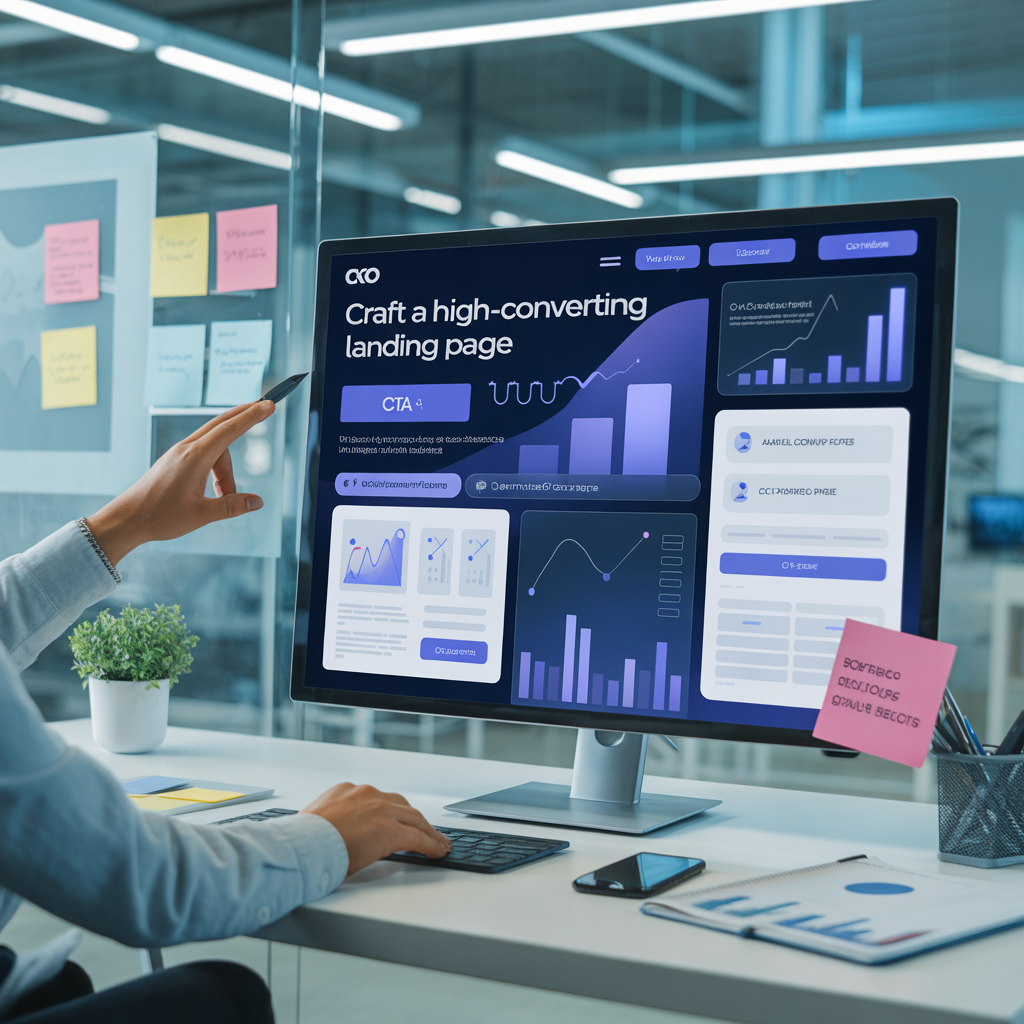
What is a High-Converting Landing Page?
High Converting Landing Page
Why is a High-Converting Landing Page So Important?
When people visit your website your landing pages are usually the thing they see after they click on an advertisement or a link. If this first meeting is confusing or does not deliver what was promised the person will probably. You will lose the money you spent on advertising.. If you have a good landing page it helps to make sure that the people who visit your website are actually interested in what you have to offer and will consider buying from you.
Having a landing page is important for more than just making sales right away. These pages are also very important for finding leads. When you get information from visitors you can use it to send them emails and special offers and to keep talking to them over time. This makes it more likely that they will buy from you in the future. It also helps you to understand the people who visit your website so you can make your marketing and products better.
A good landing page is very important for getting a return on the money you spend on marketing. Every time someone clicks on an advertisement or visits your website you should get something back. When you make your landing pages better you get value from the money you spend on advertising you spend less money to get new customers and you build a business that is more successful and sustainable. It is, about making every person who visits your website count and turning people who are just browsing into customers who will buy from you.
Why is a High-Converting Landing Page So Important?
When people visit your website your landing pages are usually the thing they see after they click on an advertisement or a link. If this first meeting is confusing or does not deliver what was promised the person will probably. You will lose the money you spent on advertising.. If you have a good landing page it helps to make sure that the people who visit your website are actually interested in what you have to offer and will consider buying from you.
Having a landing page is important for more than just making sales right away. These pages are also very important for finding leads. When you get information from visitors you can use it to send them emails and special offers and to keep talking to them over time. This makes it more likely that they will buy from you in the future. It also helps you to understand the people who visit your website so you can make your marketing and products better.
A good landing page is very important for getting a return on the money you spend on marketing. Every time someone clicks on an advertisement or visits your website you should get something back. When you make your landing pages better you get value from the money you spend on advertising you spend less money to get new customers and you build a business that is more successful and sustainable. It is, about making every person who visits your website count and turning people who are just browsing into customers who will buy from you.
Step-by-Step Guide to Crafting a High-Converting Landing Page
Let's dive into the practical steps of building a high-converting landing page. This isn't a one-size-fits-all process, but following these guidelines will set you on the right path.
1. Understand Your Audience and Offer
Before you even think about design, you need to know who you're talking to and what you're offering. What are their pain points, desires, and motivations? What makes your product or service the perfect solution for them? This understanding should inform every element of your landing page, from the headline to the call to action.
Define Your Ideal Customer Persona: Who are you trying to reach? What are their demographics, interests, and challenges?
Clarify Your Unique Selling Proposition (USP): What makes your offer stand out from the competition? Why should someone choose you?
Identify the Single Goal: What is the one thing you want visitors to do on this page? This focus is paramount for a high-converting landing page
2. Craft a Compelling Headline and Subheadline
Your headline is the first thing visitors see, and it needs to grab their attention immediately. It should clearly state the benefit of your offer and resonate with the visitor's needs. The subheadline can then expand on this benefit or provide a bit more detail.
Benefit-Oriented: Focus on what the visitor gains, not just what you do.
Clear and Concise: Get straight to the point. Avoid jargon or overly complex language.
Match the Ad Copy: Ensure your headline aligns with the ad or link that brought the visitor to your page to maintain consistency and trust.
3. Design for Clarity and Trust
Visual design plays a huge role in how visitors perceive your offer and your brand. A clean, professional, and easy-to-navigate design builds trust and guides the user towards the desired action.
Minimalist Layout: Remove unnecessary distractions like navigation menus, sidebars, and excessive links. The focus should be solely on the offer and the call to action.
High-Quality Visuals: Use relevant and appealing images or videos that reinforce your message and brand.
Scannable Content: Break up text with headings, subheadings, bullet points, and short paragraphs. People often skim web pages.
4. Write Persuasive Copy
Your words need to convince visitors that your offer is valuable and worth their time and effort. Focus on benefits, address potential objections, and create a sense of urgency or desire.
Focus on Benefits, Not Features: Explain how your product/service solves a problem or improves the visitor's life.
Use Social Proof: Include testimonials, reviews, case studies, or trust badges to build credibility.
Address Objections: Anticipate any doubts a visitor might have and address them proactively in your copy.
5. Create a Clear and Strong Call to Action (CTA)
The CTA is the button or link that prompts the visitor to take the desired action. It needs to be prominent, clear, and action-oriented.
Action-Oriented Language: Use verbs like "Download," "Sign Up," "Get Your Free Trial," "Buy Now."
Visually Distinct: Make your CTA button stand out with contrasting colors and clear text.
Reinforce Value: Briefly remind visitors what they'll get by clicking.
6. Optimize Your Forms
If your goal is lead generation, your forms are critical. Keep them as short as possible while still gathering the essential information you need.
- Only Ask for Essential Information: The fewer fields, the higher the completion rate.
-
- Clear Labels: Ensure each field is clearly labeled.
-
- Privacy Assurance: Reassure visitors that their information is safe.
7. Mobile Responsiveness
A significant portion of web traffic comes from mobile devices. Your landing page must look and function flawlessly on smartphones and tablets.
Test on Multiple Devices: Ensure your layout adapts well to different screen sizes.
Touch-Friendly Elements: Buttons and links should be easy to tap.
Fast Loading Times: Mobile users are impatient; optimize images and code for speed
8. A/B Testing and Iteration
The journey to a high-converting landing page is rarely a one-and-done process. Continuous testing and optimization are key.
Test Different Elements: Experiment with headlines, CTAs, images, copy, and form length.
Use Analytics: Track metrics like bounce rate, conversion rate, and time on page.
Make Data-Driven Decisions: Use the insights from your tests to make improvements.
Design Your High-Converting Page
Designing a high-converting landing page is about more than just aesthetics; it’s about creating an intuitive and persuasive user experience. Every visual element, every color choice, and every layout decision should be made with the primary goal of guiding the visitor towards conversion. Think of it as building a clear path through a landscape, ensuring there are no detours or confusing signposts that might lead your visitor astray.
The visual hierarchy is crucial here. You want to draw the visitor’s eye to the most important elements first – typically the headline, then the value proposition, and finally, the call to action. This can be achieved through strategic use of white space, contrasting colors, and the placement of images and text. A cluttered or visually overwhelming page will almost certainly lead to a lower conversion rate, as visitors will struggle to understand your message or find what they’re looking for.
Furthermore, the design should instill confidence and trust. Professional graphics, consistent branding, and a clean layout communicate that you are a legitimate and reputable business. High-quality imagery that is relevant to your offer can significantly boost engagement and help visitors visualize themselves benefiting from your product or service. Remember, a well-designed landing page is a silent salesperson, working 24/7 to convert your traffic.
Build Landing Pages That Sell
Building a high-converting landing page that actually sells requires a deep understanding of human psychology and persuasive communication. It’s not just about presenting information; it’s about creating a compelling narrative that resonates with your target audience’s needs and desires. This means focusing on the benefits your offer provides rather than just listing features, and speaking directly to the problems your audience is trying to solve.
The language you use is incredibly important. It needs to be clear, concise, and benefit-driven. Avoid jargon and technical terms that might alienate potential customers. Instead, use language that your target audience understands and relates to. Storytelling can be a powerful tool here, helping visitors connect with your offer on an emotional level. By crafting a narrative that highlights the transformation your product or service can bring, you can significantly increase engagement and drive action.
Finally, the call to action (CTA) is the linchpin of any selling page. It needs to be crystal clear, action-oriented, and prominently displayed. Visitors shouldn’t have to hunt for it; they should be guided towards it effortlessly. A strong CTA, coupled with a compelling offer and persuasive copy, creates a powerful synergy that can turn curious visitors into paying customers. It’s the final push that converts interest into a tangible result.
Tips and Best Practices for High Conversion
To truly elevate your landing page performance, incorporating these best practices is essential. They are the subtle nuances that often separate good pages from great ones, and great pages from high-converting landing page successes.
- Keep it Focused: Every element on your page should serve the single, primary goal. Remove anything that could distract from the conversion action. This means no external links that lead away from the page unless absolutely necessary (e.g., a privacy policy link).
- Match Ad to Landing Page: Ensure the message, tone, and offer in your advertisement directly correlate with what visitors find on the landing page. This consistency builds trust and reduces bounce rates. If your ad promises a “free ebook,” the landing page should prominently feature that ebook and a clear way to get it.
- Use Strong Visuals: High-quality images and videos can significantly impact engagement and comprehension. They should be relevant to your offer and help visitors visualize the benefits. A picture of a happy customer using your product is often more effective than a generic stock photo.
- Leverage Social Proof: Testimonials, reviews, trust badges, and case studies build credibility and reduce perceived risk. People are more likely to trust a product or service that others have vouched for. Feature these prominently, ideally near your CTA.
- Optimize for Mobile: With so much traffic coming from mobile devices, a responsive and fast-loading mobile experience is non-negotiable. Test your page on various devices to ensure it looks and functions perfectly. Buttons should be large enough to tap easily.
- A/B Test Everything: Don’t assume you know what works best. Continuously test different headlines, CTAs, images, copy variations, and even form lengths. Small changes can have a significant impact on your conversion rates. Use tools to track which versions perform better.
- Keep Forms Simple: Only ask for the information you absolutely need. Every extra field increases the friction and can lead to abandonment. If you’re offering a free guide, ask for an email address. If you’re offering a demo, you might need a phone number, but consider if you can collect that later in the sales process.
- Create Urgency or Scarcity (When Appropriate): Limited-time offers or limited quantities can encourage immediate action. However, use these tactics authentically; false scarcity can damage trust. Phrases like “Offer ends Friday” or “Only 5 spots left” can be effective.
- Personalize the Experience: If possible, tailor the landing page content based on the traffic source or user data. Dynamic content can make visitors feel more understood and increase relevance.
- Have a Clear Value Proposition: Visitors should instantly understand what you’re offering and why it benefits them. This needs to be communicated clearly and concisely, usually within the first few seconds.
Common Mistakes to Avoid
Even with the best intentions, it’s easy to stumble into common pitfalls when creating landing pages. Recognizing these mistakes is the first step to avoiding them and ensuring your pages are truly high-converting landing page assets.
- Too Many Distractions: A common error is including the main website navigation, multiple CTAs, or irrelevant links. This dilutes the focus and confuses visitors. The goal is a single, clear path to conversion. Imagine trying to guide someone through a maze with multiple exits; they’re likely to get lost.
- Vague or Generic Headlines: If your headline doesn’t immediately grab attention and clearly state the benefit, visitors will leave. Generic headlines like “Welcome to Our Services” are uninspiring. Instead, focus on the problem you solve or the primary benefit.
- Poor Mobile Experience: Assuming your desktop design will automatically translate well to mobile is a mistake. Many users browse and convert on their phones. A non-responsive or slow-loading mobile page is a guaranteed conversion killer.
- Overly Long Forms: Asking for too much information upfront is a major deterrent. Every additional field you add to a form increases the likelihood of abandonment. Only ask for what is absolutely essential for the immediate conversion goal.
- Lack of Trust Signals: Without testimonials, security badges, or clear contact information, visitors may be hesitant to provide their details or make a purchase. Building trust is paramount for convincing someone to take action.
- Not Matching Ad Copy: If your ad promises one thing and the landing page delivers another, visitors will feel misled and leave. Consistency between your ad and landing page is crucial for maintaining trust and relevance.
- Ignoring Data and A/B Testing: Launching a landing page and assuming it’s perfect is a missed opportunity. Without testing different elements, you’re leaving conversions on the table. The data from A/B tests provides invaluable insights for optimization.
Conclusion
To write a landing page that converts well takes a continuous process of audience analysis, clear and irresistible offers, and careful optimization of every element for the desired impact. You are moving beyond simply directing traffic and are creating experiences that connect with prospects and move them to take an action. Clear communication, value proposition, and great user experience combine to create not only attractive but also high-performing pages that bring you leads and customers. Think of your landing page as your digital handshake, your passive salesperson, and the cornerstone of your digital marketing efforts. With some research and focused effort, you can have landing pages that make you money!
FAQ
Q1: How long should a high-converting landing page be?
A: The length of a high-converting landing page can vary greatly depending on the offer and audience. Generally, it’s best to keep it as concise as possible while still providing all the necessary information to persuade the visitor. Focus on clarity and scannability. For simple offers like downloading a free guide, a shorter page might suffice. For more complex offers like software demos, a slightly longer page with more detailed explanations and social proof may be necessary.
Q2: Do I need to hire a designer to create a high-converting landing page?
A: Not necessarily! While professional designers can be invaluable, there are many user-friendly landing page builders (like Leadpages, Unbounce, Instapage) that provide templates and drag-and-drop interfaces. These tools make it accessible for beginners to create visually appealing and effective landing pages. The key is to understand the principles of design and conversion, which you can learn and apply with these tools.
Q3: How do I measure the success of my landing page?
A: The primary metric for measuring the success of a high-converting landing page is its conversion rate. This is calculated by dividing the number of conversions (desired actions taken) by the total number of visitors to the page, then multiplying by 100. Other important metrics to track include bounce rate (percentage of visitors who leave without taking action), time on page, and click-through rates on your call to action.
Q4: What’s the difference between a landing page and a regular website page?
A: The main difference lies in their purpose and structure. Regular website pages (like your homepage or “About Us” page) often have multiple goals and navigation options, aiming to guide users through your entire website. A high-converting landing page, however, has a single, focused objective and is designed to eliminate distractions, directing visitors towards one specific action (e.g., filling out a form, making a purchase)