The internet is always. Your website is like the front door of your company. Things that look really cool today can look old tomorrow. When we think about what’s coming next knowing about the latest website design trends for 2026 is not just about how things look it is about making sure people like your website and want to stay on it. Website design trends for 2026 are important because they help us understand how people use websites and what catches their eye. If we know about these changes we can make choices about how our website should look and work so we can connect with the people we want to reach and do well with our business. Website design trends, for 2026 will help us make a website that people like. That helps our company succeed.
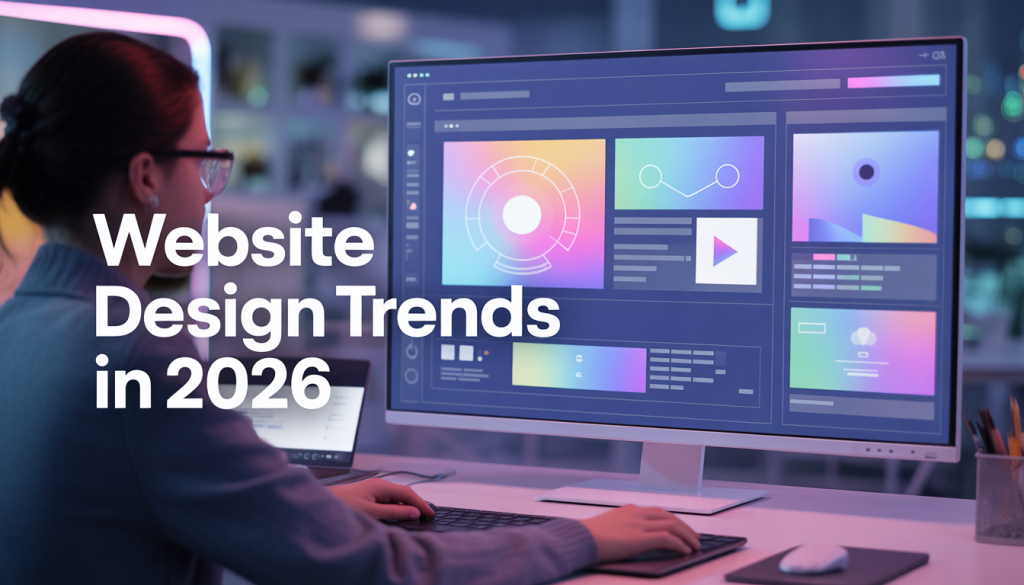
2026 Design: What's Next?What are Website Design Trends 2026?
Website design trends 2026 are really about making experiences that are easy to use and fun. Website design trends 2026 should be interesting. Do what the user needs. They are about thinking when it comes to making websites. This way your website will still be good and competitive in the future. If you pay attention to website design trends 2026 you can get ready. Try new things before you have to. This is better, than trying to catch up on.
Why are Website Design Trends 2026 Important?
Using the website design trends for 2026 is really important for your online presence. If you have a website that looks modern and follows the design principles people are more likely to look at it and come back. This is because a fresh and modern design shows that you are professional and it makes a first impression.
People are more likely to look around your website of leaving right away.
Then there is the fact that these trends usually make the website easier to use. Designers and developers figure out what people like. They use that to create new trends. This means your website can have menus that’re easy to use load fast have clear buttons that tell people what to do and have content that looks good, on phones and computers.
When your website is easy to use people trust your website more. They use your website more. They are more likely to do things you want them to do like buy something from your website or get in touch with you. This is because of the website design trends for 2026.
To stay ahead of others you need to know about the website design trends for 2026. Your competitors are also trying to make their website look better. If you use new website design trends for 2026 people will think your brand is new and exciting. You will show people that you want to give them an experience on your website. This will make your brand different, from others and people will want to use your website because it is modern and looks good.
Step-by-Step Guide to Implementing 2026 Design Trends
Embarking on a website redesign based on website design trends 2026 requires a plan.
The first step is to do some research and get inspiration.
This means looking at design blogs, industry awards and competitor websites that are trying things.
You need to find trends that fit your brand and what your target audience likes.
Don’t just follow trends blindly; think about which ones add value and make your users experience better.
The next step is to define your goals and audience.
Before you start making changes ask yourself what you want to achieve with the redesign.
Do you want conversions, a better brand image or more user engagement?
At the time understand your target audience really well.
What are their online habits?
What kind of design do they like?
Matching website design trends 2026, to your goals and audience needs will make your redesign make sense.
The final stage is to plan make a prototype and improve it.
Once you know what you want create some designs and mockups using the trends you’ve chosen.
Make sure it’s easy to use and accessible.
Create a prototype. Test it with users to get feedback.
Be ready to make changes based on this feedback.
Implementing website design trends 2026 this way will help you achieve your goals.
See why users upgrade to Undetectable for AI humanization.
On Basic Public Model
Undetectable AI’s Advanced Model
Never Worry About AI Detection Again
Our advanced text Humanizer helps you humanize content from tools like ChatGPT, Gemini, Llama, Claude, Jasper, and more. It transforms robotic AI-generated text into natural writing that improves readability, feels genuinely human, and scores well in leading AI detection tools. Here’s what you can achieve:
Score as human across advanced AI detection tools with ease, helping your content stay natural, credible and undetectable.
Pursue academic excellence while ensuring your assignments are consistently AI-free.
Convert AI content into keyword-rich human-like text that ranks high in SERPs and avoids spam penalities.
Ensure your emails and professional writing maintain a human tone and avoid detection as spam or AI-generated.
Get Ready for Future Web Looks
Trend 1: Hyper-Personalization and AI Integration
Trend 2: Immersive and Interactive Experiences
In website design trends 2026, static pages are giving way to dynamic, immersive, and deeply interactive experiences. Users crave engagement, and designers are responding by incorporating elements that draw them into the content and encourage active participation. This includes advancements in areas like Augmented Reality (AR) and Virtual Reality (VR) integrations, allowing users to virtually try on products, explore virtual showrooms, or even take virtual tours directly from their browsers. Think of a furniture website where you can place a sofa in your actual living room using AR.
Beyond AR/VR, interactivity is being woven into the fabric of web design through sophisticated micro-interactions, animated storytelling, and gamified elements. Subtle animations that provide feedback on user actions, engaging parallax scrolling effects that create depth, and interactive infographics that reveal information as users scroll or click are all part of this trend. The aim is to make browsing less passive and more of an engaging journey, transforming a simple website visit into an experience.
This focus on interactivity is not just about novelty; it’s about enhancing comprehension and retention. When users actively participate with content, they are more likely to understand and remember it. Furthermore, these engaging experiences can significantly increase dwell time on your site, signaling to search engines that your content is valuable and keeping visitors captivated for longer periods, a key aspect of website design trends 2026.
Trend 3: Sustainable and Ethical Design Practices
As global awareness of environmental and social responsibility grows, so too does the importance of sustainable and ethical design practices in website design trends 2026. This trend focuses on creating websites that are not only visually appealing and functional but also minimize their environmental impact and adhere to ethical principles. This includes optimizing websites for faster loading times and reduced energy consumption, making them more eco-friendly and accessible to users with slower internet connections.
Ethical design also encompasses inclusivity and accessibility. This means ensuring that websites are usable by everyone, regardless of their abilities, age, or background. This involves adhering to WCAG (Web Content Accessibility Guidelines), using appropriate color contrast, providing alt text for images, and designing for keyboard navigation. It’s about creating a digital space that is welcoming and equitable for all users, a fundamental aspect of responsible web development.
Furthermore, ethical design extends to transparent data practices and mindful user engagement. Websites should be clear about how user data is collected and used, respecting privacy and avoiding manipulative design patterns. By embracing sustainable and ethical principles, businesses can build trust with their audience and demonstrate a commitment to positive social and environmental impact, making this a crucial consideration for website design trends 2026.
Trend 4: Bold Typography and Expressive Visuals
In website design trends 2026, typography is stepping out of its supporting role and taking center stage. Expect to see a rise in bold, expressive, and even experimental typography that acts as a primary design element. Large, impactful headlines, unique font pairings, and creative text animations will be used to grab attention, convey personality, and guide the user’s eye through the content. This trend embraces individuality and allows brands to communicate their unique voice through their choice of lettering.
Complementing this typographic boldness is a surge in expressive and often abstract visuals. This includes the use of 3D illustrations, generative art, and unconventional photography that moves beyond stock imagery. The aim is to create visually striking and memorable designs that evoke emotion and spark curiosity. These elements are used not just to decorate but to enhance storytelling and create a distinct brand identity that stands out in a crowded digital landscape.
The combination of bold typography and expressive visuals creates a powerful and cohesive aesthetic. It allows for a more artistic and less formulaic approach to web design, giving brands the opportunity to showcase their creativity and connect with their audience on a deeper, more emotional level. This is a key aspect of website design trends 2026 for brands looking to make a strong visual statement.
Trend 5: Minimalist Interfaces with Maximalist Impact
While we’ve seen minimalism persist for years, website design trends 2026 are evolving it into a more strategic approach. This isn’t just about white space; it’s about creating minimalist interfaces that deliver maximalist impact through thoughtful design choices. This means decluttering pages to focus on essential content and clear calls to action, but then using that clarity to amplify key messages and user flows. Think of a clean layout that highlights a single, powerful visual or a concise, compelling piece of text.
This trend emphasizes user-centricity, stripping away anything that doesn’t serve a clear purpose. Navigation becomes incredibly intuitive, and information architecture is streamlined, making it effortless for users to find what they need. However, within this simplicity, there’s an opportunity for subtle yet powerful design elements – perhaps a unique hover effect, a precisely chosen accent color, or a carefully crafted animation that guides the user’s attention.
The beauty of minimalist interfaces with maximalist impact lies in their efficiency and effectiveness. By removing distractions, these designs ensure that the most important elements shine through, leading to a more focused and persuasive user experience. This approach is particularly effective for conveying complex information or driving specific actions, making it a highly valuable trend in website design trends 2026.
Tips and Best Practices for 2026 Design Trends
When diving into website design trends 2026, it’s crucial to approach them with a strategic mindset. Always start by understanding your target audience. What are their expectations? What kind of design language resonates with them? A trend that works for a Gen Z audience might not be suitable for a B2B enterprise. Ensure that any adopted trend enhances, rather than detracts from, the user experience for your specific visitors.
Secondly, prioritize functionality and usability. While visual appeal is important, a beautiful website that is difficult to navigate or use will fail. Test your designs rigorously, especially when incorporating new interactive elements or complex personalization features. Ensure that your website remains accessible to all users, adhering to accessibility standards. This is not just a trend, but a fundamental requirement for good web design.
Finally, don’t be afraid to experiment, but do so strategically. Not every trend will be a perfect fit for every brand. Pick and choose the trends that genuinely align with your brand identity, business goals, and user needs. Implement them thoughtfully, measure their impact, and be prepared to iterate. The goal is to evolve your website in a way that keeps it fresh and effective, not to chase every passing fad.
Common Mistakes to Avoid with 2026 Design Trends
One of the most common pitfalls when adopting website design trends 2026 is overdoing it. It’s easy to get excited about new possibilities and cram too many trendy elements into a single design. This can lead to a cluttered, confusing, and ultimately ineffective website. Remember that trends are guidelines, not mandates, and a balanced approach is often more impactful than an overwhelming one. Less can truly be more when implemented thoughtfully.
Another mistake is ignoring your core brand identity. While it’s important to stay current, your website design should always reflect your brand’s personality, values, and message. Blindly adopting a trend that clashes with your brand’s established image can alienate your existing audience and confuse potential customers. Ensure that any new design elements are integrated seamlessly and authentically, reinforcing rather than contradicting your brand.
Lastly, neglecting performance and accessibility in the pursuit of trendiness is a critical error. A visually stunning website that loads slowly, is difficult to use on mobile devices, or excludes users with disabilities will ultimately fail. Always test your designs for speed, responsiveness, and accessibility compliance. These fundamental aspects of web design should never be sacrificed for the sake of following website design trends 2026.
Conclusion
As we gaze into the near future, the website design trends 2026 promise an exciting evolution of the digital landscape. We’re moving towards experiences that are more intelligent, immersive, and ethically grounded. From the hyper-personalization powered by AI to the captivating interactivity and the emphasis on sustainable design, the focus is firmly on creating websites that are not only aesthetically pleasing but also deeply engaging, user-centric, and responsible. Embracing these trends will be key for businesses aiming to connect authentically with their audience, build lasting relationships, and thrive in the ever-changing digital marketplace.
By strategically integrating these emerging patterns – be it through bold typography, minimalist yet impactful interfaces, or expressive visuals – you can ensure your website remains at the forefront of innovation. The advice is clear: research thoroughly, understand your audience, prioritize usability, and implement trends thoughtfully. Avoiding common mistakes like overdoing it, clashing with your brand, or neglecting performance will pave the way for a successful and impactful online presence. The future of web design is here, and it’s designed to be more personal, engaging, and purposeful than ever before.
FAQ
Q1: How can I tell if a website design trend is right for my business?
The best way to determine if a trend is suitable is to consider your target audience and your business goals. Does the trend align with your audience’s expectations and how they interact online? Will it help you achieve your specific objectives, such as increasing conversions or improving brand perception? Always prioritize functionality and user experience over simply following a trend for the sake of it.
Q2: Is it expensive to redesign a website based on new trends?
The cost of a redesign can vary significantly. Implementing minor updates to incorporate a new color palette or typography might be relatively inexpensive. However, integrating advanced features like AI personalization or complex AR/VR elements can require a more substantial investment. It’s important to budget accordingly and prioritize the trends that will provide the greatest return on investment for your business.
Q3: How often should I update my website design?
There’s no strict rule, but it’s generally recommended to re-evaluate your website design every 1-3 years. This allows you to incorporate emerging website design trends 2026 and ensure your site remains modern, functional, and competitive. However, if you notice a significant drop in user engagement or your site starts to feel outdated, it might be time for an earlier refresh.
Q4: What are the most important aspects of accessibility in website design?
Key aspects of accessibility include ensuring keyboard navigability (users can navigate with a keyboard alone), providing alternative text for images (screen readers can describe images), using sufficient color contrast (making text readable for those with visual impairments), and offering clear and consistent navigation. Adhering to WCAG guidelines is essential for creating an inclusive website.
Q5: How can I implement AI personalization without having a huge development team?
Many website platforms and content management systems (CMS) now offer integrated AI tools or plugins that simplify personalization. These tools can help with tasks like recommending products, personalizing content based on user behavior, or even tailoring pop-up messages. Researching solutions compatible with your existing platform can make implementing AI-driven personalization more accessible